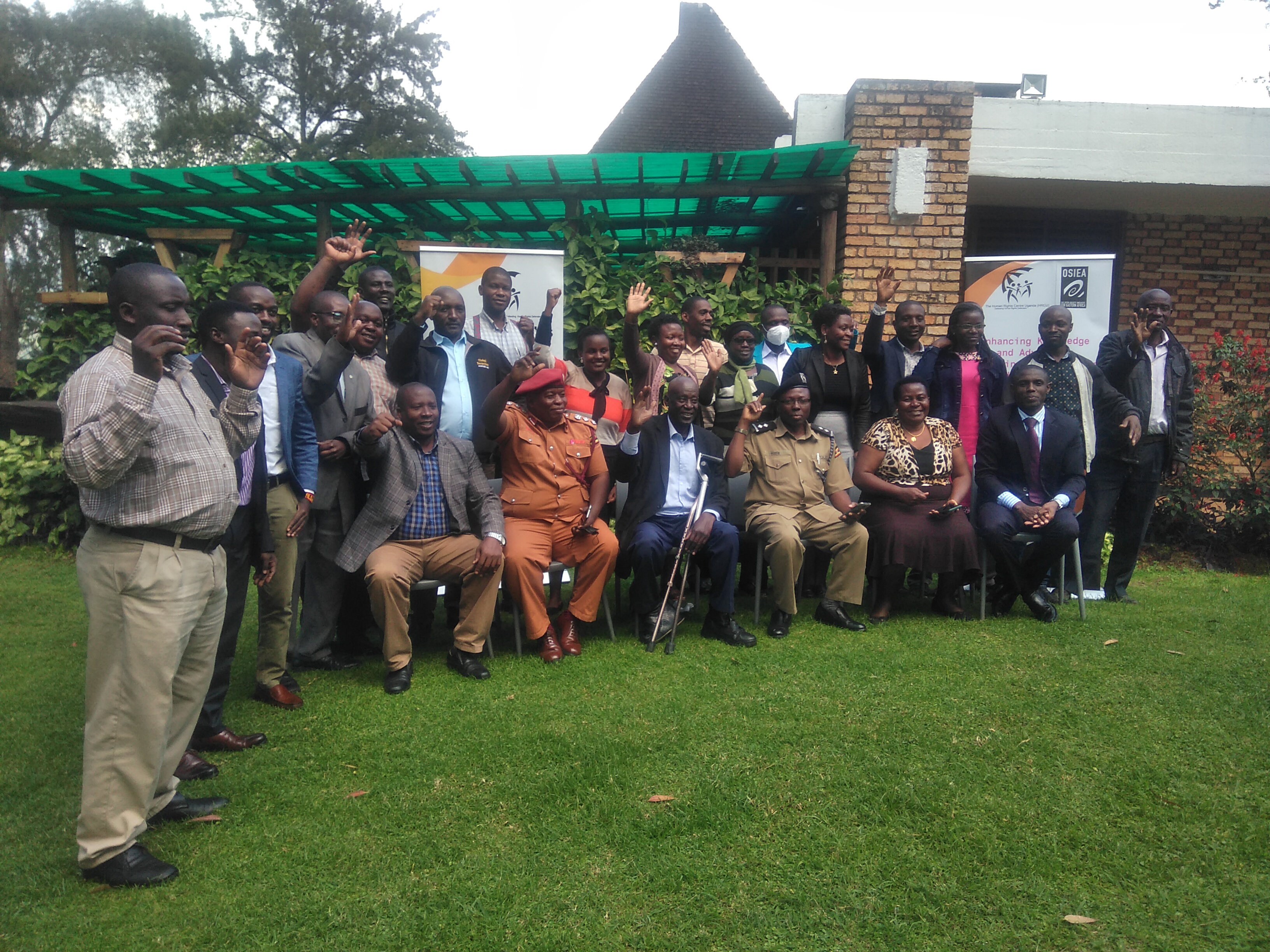
Friday, June 10, 2022

RESILIENCE – WHAT IT IS TO HRDs

An ability to recover from or adjust easily to misfortune or change. The ability to be happy, successful, etc. again after something difficult or bad has happened:

To understand community resiliency, we need to understand what the capacity of the community is to respond or to proactively address their own issues. We define Community Capacity in four ways:

  • Does the community have strong Decision-making mechanisms in place?
  • Are they able to share knowledge and have strong Organizational Learning methods?
  • Do they have Legal Structure that they would need to act in their domain?
  • Do they have the Financial Resources that are required in order to take action?


It also means that they need to think about the flow of resources (people, money, food, energy, water, etc.) through their community over time. Community engagement needs to give people the tools to shape both the visible and the invisible.

How can we help a community raise their capacity so they can get to this larger scale and deploy what is often a more effective strategy for community development?

How do economic shocks and financial resilience shape civic engagement, especially for the economically insecure?

Finally, if economic shocks decrease civic engagement but resilience factors protect against such decreases, what can increase households’ resilience to future financial crises?


This looks at government relief programs, unemployment benefits, job protections, and household savings as sources of resilience. Their connection to positive civic engagement can serve as a springboard for broader discussion of what kinds of protective programs and policies are effective and along what metrics.

In times of crisis, structures at the household, workforce, and policy levels can promote resilience and buffer against negative impacts of an economic shock. Resilience at the household level comes from factors such as the size of one’s liquid assets or savings, access to credit, and social networks that have an ability to provide support during hard times. For people with less resilience, economic shocks are more likely to have severe consequences. For example, where government policy offers limited insulation from economic shocks, households turn to debt to weather financial shortfalls.

NOTE:

  • Civic action will be lower for people who experience large economic shocks, compared to similar people who do not experience a large shock.
  • In the presence of higher economic resilience, large economic shocks will not correlate with lower civic action.

RESILIENCE IN HR WORK USING HRBA

Using the HRBA that Emphasizes Participation, Accountability, Non-Discrimination, Empowerment and Link to Human Rights (PANEL)

Applying the three pillars of Participatory Approach;

-          Starting with the participants’ experience

-          Critically analysing and reflecting on the experiences

-          Develop strategies for Action

Hold a Discussion in Groups of Eight to reflect on Resilience in HR Work.


This approach enables people from different backgrounds, cultures, values and beliefs to learn effectively together and learn from each other. It encourages social analysis aimed towards empowering participants to develop concrete actions for social change that are in accordance with Human Rights Values and standards. We aim at building the HRDs capacity by Building Knowledge, skills and attitudes.


Thursday, June 9, 2022

 CIVIC ENGAGEMENT THE MOST APPROPRIATE MEANS OF ATTAINING CHANGE

Civic engagement or civic participation is any individual or group activity addressing issues of public concern. Civic engagement includes communities working together or individuals working alone in both political and non-political actions to protect public values or make a change in a community.

"Contributing to society and supporting our own well-being are two sides of the same coin -- by being engaged and contributing we bolster our well-being and become more resilient”.

Civic engagement involves “working to make a difference in the civic life of one’s community and developing the combination of knowledge, skills, values and motivation to make that difference. It means promoting the quality of life in a community, through both political and non-political processes.”

Civic engagement includes both paid and unpaid forms of political activism, environmentalism, and community and national service. Volunteering, national service, and Human Rights Education are all forms of civic engagement.

Participation in civic engagement activities can help citizens become better informed about current events.

HRBA creates channels for the participation of a broad spectrum of stakeholders, including, poor and disadvantaged people, minorities, indigenous peoples, women, children and youth. HRBA promotes active, meaningful and continuous voluntary participation; it stresses that developing capacities for participation is an important result in itself.

Definition and Constructs

Civic engagement is defined as working to make a difference in the civic life of one’s community. It also involves developing the combination of knowledge, skills, values, and motivation to make that difference. These activities enrich the lives of citizens and are socially beneficial to the community. We take a look at the four constructs


FOUR CONSTRUCTS OF CIVIC ENGAGEMENT

FOUR CONSTRUCTS OF CIVIC ENGAGEMENT

Civic Engagement

Working to make a difference in the civic life of one’s community

Civic Action

Civic Commitment or Duty

Civic Skills

Social Cohesion

Civic Action; or participation in activities such as volunteering or service learning to help better the community

Civic Commitment; or Duty, or the willingness to make positive contributions to society

Civic skills; or the ability to be involved in civil society, politics and Democracy

Social Cohesion ; or a sense of reciprocity, trust and bonding to others.

 It’s found out that “among HRDs, volunteering plays a valuable role in shaping how they learn to interact with their community and develop the skills, values, and sense of empowerment necessary to become active citizens.”

Another possible form of civic action and civic commitment and duty is Human Rights Education. Research shows that HRE and civic engagement can be related but are not the same thing. HRE does not have to include a civic dimension and not all forms of civic engagement are HR based.

"As people face more and more Human Rights challenges, in terms of environmental, economic and social factors like Poverty, GBV and climate change, as well as mental health issues, the potential for simple programmes like community empowerment, inclusivity to improve resilience is really exciting through participatory approach.”

Our communities are stronger when everyone has the opportunity to contribute. Just and resilient states rely on empowered communities—we believe that participatory design is key to that process. Our work as HRDs can help a community establish relationships through coordination, gain knowledge, and be better prepared to face dynamic Human Rights challenges.


We believe that engaging communities in design thinking is an important way to create successful interventions from planning and design through implementation. The community’s input shaped a neighborhood identity that they could proudly integrate into development projects with greater autonomy and cohesion. This is attained through Participatory Approach.

International Covenant on Economic, Social and Cultural Rights (ICESCR)

Highlights Violations of Economic, Social and Cultural Rights

The notion of violation applied vigorously to civil and political rights is often not used regarding economic, social and cultural rights. The Committee on Economic, Social and Cultural Rights has developed the concept of 'minimum core obligations'. The Committee developed this concept mainly to refute the argument that lack of resources hinders fulfillment of obligations. The Committee has stated that every State has a minimum core obligation to satisfy minimum essential levels of each of the rights of the Covenant. The Committee has clarified that a State party 'in which any significant number of individuals is deprived of essential foodstuffs, of essential primary health care, of basic shelter and housing, or of the most basic forms of education is prima facie, failing to discharge its obligations under the Covenant'.

Thus, it can be construed that failure to fulfill minimum core obligations will be a violation of the rights enshrined in the Covenant. However, the notion of violation of economic, social and cultural rights need to be further developed. A group of distinguished experts in international law has developed principles known as the Limburg Principles. These principles provide a basic framework through which the notion of violations of economic, social and cultural rights can be developed. According to the Limburg Principles, ‘a failure by a State party to comply with an obligation contained in the Covenant is, under international law, a violation of the Covenant.’

Provisions

Articles 2(2) and 3: Non-discrimination

Article 2 (2) and Article 3 deal with the non-discrimination aspect. Article 2 (2) is similar to other instruments in stating that the rights should be enjoyed without discrimination on the grounds of 'race, colour, sex, language, religion, political or other opinion, national or social origin, property, birth or other status.'

The Committee’s General Comment No.20 underlines that, in order for States parties to “guarantee” that the Covenant rights will be exercised without discrimination of any kind, discrimination must be eliminated both formally (ensure that the State’s Constitution and laws do not discriminate) and substantively (elimination of de facto discrimination in practice). States parties must make particular efforts in eliminating systemic discrimination and discrimination in the private sphere (families, workplaces).

Article 3, on the other hand, is more specific. It provides for the 'equal right of men and women to the enjoyment of rights…set forth in the Covenant.'

The concept of 'progressive realization' is not applicable to the non-discrimination clause and the obligation to ensure equal rights of men and women. The obligation is to ensure it immediately and not progressively.

The obligation to ensure the equal rights of men and women includes affirmative action to eliminate conditions that contribute to discrimination.

Gender Equality as a Human Right

This refers to the equal rights, responsibilities, and opportunities of Women, and men, girls and boys and of gender-diverse people. They all enjoy the same status and have equal opportunity to realise their full human rights and potential to contribute to national, political, economic, social and cultural development and to benefit from the results.

This is protected by;

-          The Charter of the United Nations

-          Constitutive Act of the African Union

-          Universal Declaration of Human Rights (UDHR)

-          International Covenant on Civil and Political Rights (ICCPR)

-          International Covenant on Economic, Social and Cultural Rights (ICESCR)

-          The Convention on Elimination of All forms of Discrimination against Women (CEDAW)

-          The Protocol to the African Charter on Human and People’s Rights on the Rights of Women in Africa (Maputo Protocol)


Monday, June 6, 2022


CONSISTENT HUMAN RIGHTS EDUCATION IS THE MEANS TO ELIMINATE THE RISING CASES OF HUMAN RIGHTS ISSUES IN KIGEZI

LOSCO this morning paid a courtesy visit to the Kigezi Regional Office of the Uganda Human Rights Commission (UHRC).

This is a new office still being established under the leadership of Ms. TWEMBI B. THEOPISTA the Principal Human Rights Officer.


This was in a bid to identify the areas of collaboration and promotion of Human Rights in Kigezi Region.

The Issues Identified are the unresolved cases of Teenage Pregnancies, rising cases of Domestic and Gender based violence, Land rights violations among other issues that have increased the loss of lives.

 L-R -Taremwa Albert - Executive Director LOSCO, Ms. Namara Natasha Ellen, Programs Manager LOSCO and Ms. Twembi B. Theopista - Principal Human Rights Officer UHRC. (Photo by LOSCO June 2022)


The Most Urgent intervention in curbing these issues is Mindset Change using a Gender Intersectionality lens targeting both Men and Women and also the Youths, PWDs, the Poor, which can be done through Community Sensitisation, Duty bearers Human Rights Education and consistent follow up on the legal Processes which can be done in close collaboration with the boundary stakeholders leaving on one behind.


Thursday, May 26, 2022


HUMAN RIGHTS ABUSES AND MURDERS CAN BE STOPPED IN KIGEZI SUB-REGION THROUGH SENSITISATION & HUMAN RIGHTS EDUCATION

LOSCO today paid a courtesy visit to the Kigezi Regional Police Commander; SSP Ibrahim Saiga for a discussion on the rising cases of murders related to gender based violence. During the visit, the Commander agreed and clearly explained that property inheritance and Land related disputes are some of the leading causes of continuous killings in the region, with Rukungiri district topping the chats where in the Month of May alone, 15 lives have been lost. In appreciation of the LOSCO Saiga requested that we actively sensitize both men and women since they are equally affected by domestic violence.


Kigezi presents a unique position where both men and women are equally involved compared to other regions where women are mostly affected and this calls for community sensitisation and Human rights Education.

In most cases, the people who bought the land are not in the picture when the atrocities are being committed especially where the sons and daughters of the deceased are involved. In other cases, the limited job opportunities cause men to be desperate and end up selling the produce that women (their wives) pay steeply with their seat to have for food to their children and this always does not go well with both as Kigezi has continued to witness a steep rise in such challenges.

Women also contribute to economies through their work in caring for families. However, this is often not acknowledged or reflected in national economies, despite lobbying by women’s organisations.

Both push and pull factors have contributed to women increasingly taking up employment. Women and girls in particular suffer from inequitable land rights and experience restricted access to resources and inheritance. Boys and men can also be denied access, such as when the first son inherits more than the second or third son. Rights to resources may also affect ability to access other resources or services. For example, a woman’s lack of land ownership or rights may inhibit her ability to access credit, as land is often used as collateral. Achieving more equitable access to resources offers significant opportunities both for economic growth and for women’s empowerment

Sunday, May 22, 2022


MEETING WITH REGIONAL PRISONS COMMANDER KIGEZI ON THE STATE OF HUMAN RIGHTS IN PRISONS SERVICE

This morning, I paid a visit to the Regional Prisons Commander – Kigezi Region SSP Festo Sambya and among the issues discussed are ways and means of collaboration to promote Human Rights in the Prisons Service. One of the ways is through building the capacity of Officers through Human Rights Education and venturing into community service with a view of deconstructing the narrative that exists between communities and prisons.


“We would want to establish working relationships with other Human Rights Activists so that our services are not perceived from the wrong angle and if all our OCs in the region are taken through a Human Rights training, it would be a welcome initiative for us and the country as a whole. No one can stand alone”. SSP Festo Sambya RPC Kigezi Region

Issues provided for in Article 44 of Ugandan Constitution 1995 several Human Rights issues are continuously addressed inappropriately. About Prohibition of derogation from particular human rights and freedoms. Whereby Notwithstanding anything in this Constitution, there shall be no derogation from the enjoyment of the following rights and freedoms—

(a) freedom from torture and cruel, inhuman or degrading treatment or punishment;

(b) freedom from slavery or servitude;

(c) the right to fair hearing;

(d) the right to an order of habeas corpus.

This in the Prisons Service needs to be well versed with and need to be handled as a matter of urgency.

LOSCO has a Mandate to work in partnership with all Government Agencies, Departments and Agencies for improvement of Human Rights Situation in the Region  and the country for Development and Peaceful Co-existence.

LOSCO QUARTERLY HUMAN RIGHTS SITUATION ANALYSIS AND KEY ISSUES IN KIGEZI

  April 1, 2025   Dear Human Rights Defenders, Actors and Partners in the Promotion and Protection of Human rights; A Happy New Month!...